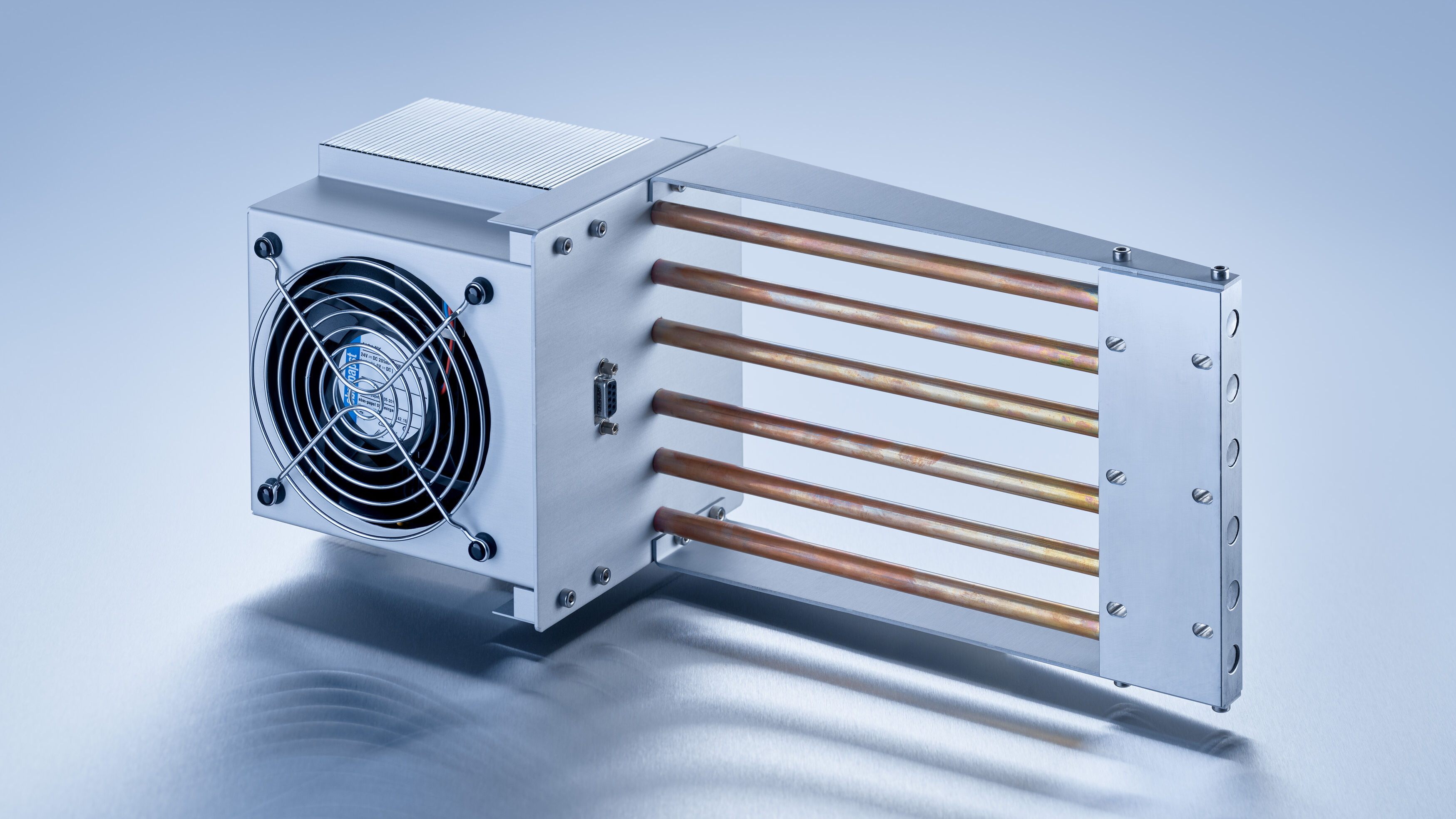
Cooling assemblies for cooling directly at the hotspot
Heat pipe heat sinks direct heat to areas where cooling is possible.
Miba develops and manufactures heatpipe heatsink assemblies for IGBT, SiC, and high-power modules. We can produce them according to your drawings or based on your basic requirements.

Traditional heatsinks fail when there isn't enough space at the hotspot for adequate cooling surface area. A heatpipe heatsink transfers heat to the right location.

Two-phase transport distributes heat nearly isothermally across the entire cooling surface. Peak temperatures decrease. IGBT and SiC components operate more reliably and last longer.

Miba supplies the heatpipe heatsink as a fully assembled, tested unit. Tailored to your installation space and performance requirements, it requires minimal integration effort on your part.
The hotspot is located where there is no room for cooling. A conventional heatsink cannot be installed there. Developers of IGBT and SiC modules are well aware of the result:

Request a consultation now!

Each heat pipe heatsink assembly is tailored to your installation space and performance requirements. Geometric flexibility allows for customizations that cannot be achieved with standard products.

Miba supports the entire development process: design, simulation, mechanical testing, manufacturing and thermal validation. In-house testing capabilities help reduce development time.

Our heatpipe heatsinks operate as a hermetically sealed vacuum system without pumps or an external power source. At the hotspot, the working fluid vaporizes; the resulting vapor flows to the cooler zone, condenses on the cooling surface and is returned via a capillary structure.

“Heatpipe heatsinks are a highly efficient tool for us to dissipate heat from hotspots to the right location in the system, thereby enabling us to address thermal limitations in compact power electronics designs.”
Markus Ettl
Head of Sales Miba Cooling
Heatpipe heatsinks are used in applications where high heat dissipation meets limited installation space and liquid cooling can pose a system risk.
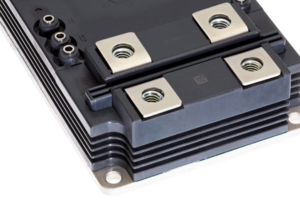
Modern IGBT, SiC, and GaN modules generate heat in a small area. A heatpipe heatsink transfers heat from the module to the available cooling surface without requiring additional system components.

Medical systems require a high degree of reliability, even when power is limited. Heatpipe heat sink assemblies operate without a pump. They are low-maintenance and robust.

Lightweight design and reliability are inextricably linked in the aerospace industry. Heatpipe heatsinks are lightweight, compact and operate without an external power intake.
From individual heat pipe heatsinks to complex heat pipe heatsink assemblies
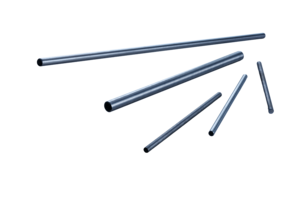
Heat pipes bridge the gap when air cooling is no longer sufficient and liquid cooling isn't an option.
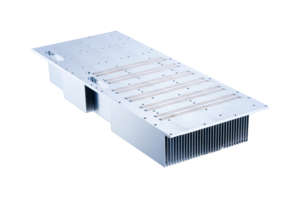
Integrated directly into the heatsink structure. Absorbs heat locally at the hotspot and dissipates it perfectly.
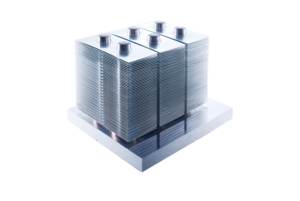
Vertical, for SiC, GaN, and IGBT modules. Utilizes the height to achieve higher thermal performance.
When a hotspot develops and there isn't enough space for adequate cooling. A heatpipe heatsink transfers the heat to a location where cooling is possible.
No. Heat pipes operate as two-phase systems without an external power source. They typically require no maintenance.
Depending on their design, heatpipes can also operate against gravity. Their orientation and the load conditions are taken into account in the design.
That depends on the combination of fluid and material. Miba designs both based on your specific application
Miba handles every step in-house, including thermal testing and qualification: requirements, simulation and design, prototyping and validation.
Miba uses helium leak tests and non-destructive testing. The scope of testing is defined on a project-by-project basis.
