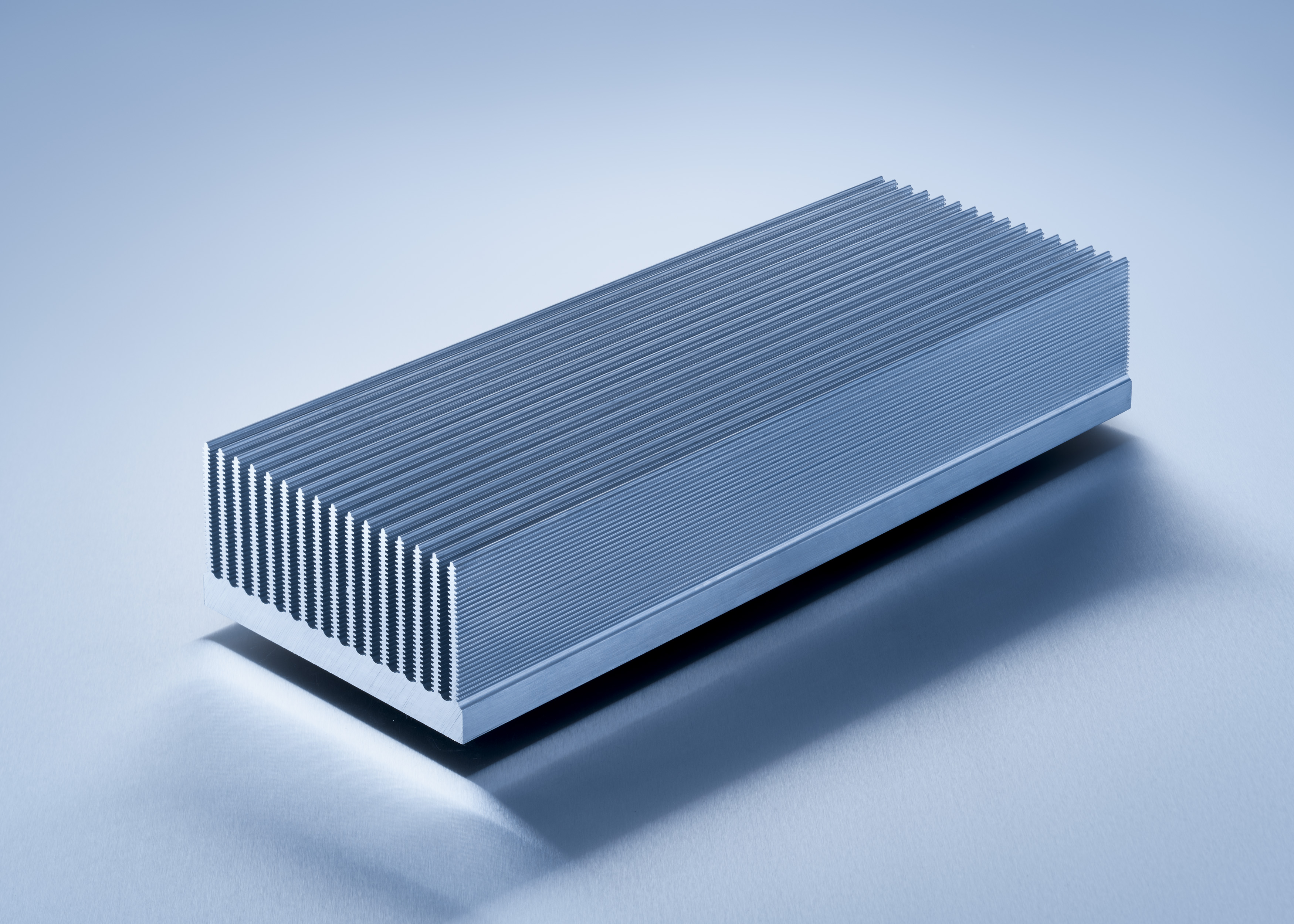
Custom Air Coolers for IGBTs, MOSFETs, and Power Modules
Miba develops and manufactures air-cooled heatsinks for power electronics. We work with you to design the air cooler, test it in-house and manufacture it in series production.

Miba supports you from the initial thermal design through to serial production.

Fins and base plate made of aluminum or copper; fin height, fin spacing, and radiator geometry can be selected as desired.

Heatsinks require neither a pump nor coolant nor an external power source. This makes them an economically attractive solution.
If you wait too long to consider the heatsink in the development process, you risk hot spots, which, in extreme cases, can lead to component failure.
The challenge lies in designing a heatsink that is optimized for installation space, airflow, power dissipation, and mounting conditions. Miba helps you define this solution early in the development process.

Talk to our Solution Team!
We handle both build-to-print projects based on your drawings and build-to-spec projects that are closely tied to the development process.
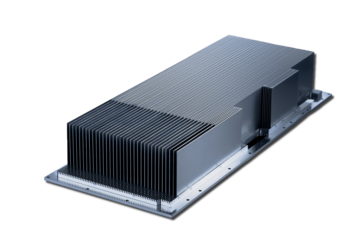
The right choice when high design flexibility and a compact footprint are required.
Individual fins are bonded to a slotted base plate. A thermally conductive epoxy adhesive ensures high mechanical and thermal stability.
Fins and base plates made of aluminum or copper can be freely selected in terms of height, width, and length. Different materials and heights can be combined in a single heat sink solution.
Download Product Data Sheet Bonded Fin
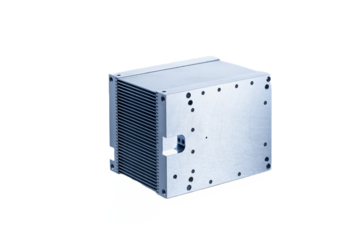
For applications requiring maximum thermal conductivity.
Individual or folded fin stacks are soldered directly onto the copper base plate. This results in a thermally and mechanically robust connection.
The fins and base plate can be optimized separately for performance and functionality. Custom fin positions and wave-shaped fin designs are possible.
Download product data sheet Soldered Fin
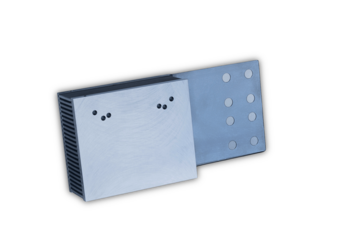
This heatsink is suitable for applications with high thermal loads, high air velocities and high mechanical stresses, such as in industrial inverters and automation systems.
Wide, grooved fins are pressed into the base plate, creating a cold-welded bond without the use of adhesive. The connection is formed during the pressing process. High fin density and a grooved surface enable optimal thermal performance while accounting for the resulting pressure drops.
Download Product Data Sheet Pressed Fin (SKL)
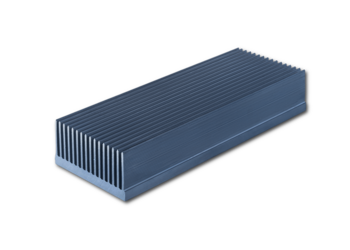
A cost-effective heatsink solution designed to push the performance limits of air cooling across a wide range of industries.
A specialized extrusion pressing technique produces profiles with extremely high fin density and performance-enhancing ribbing.
Download product data sheet High Fin Density Extrueded Profile
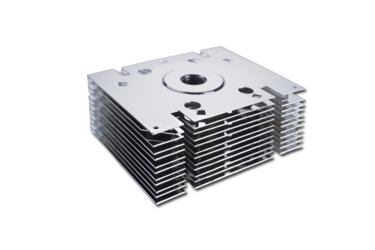
Suitable for air cooling in industries with extremely high clamping forces and high thermal output. Specifically designed for hockey-puck-shaped wafer-on-substrate semiconductors.
Copper fins are soldered onto a round copper core, and the entire assembly is then nickel-plated.
High flexibility in heatsink sizes, tailored to spatial and thermal requirements.
Download product data sheet SKL-SF

Miba tests and validates air coolers in-house. This means: no external testing labs or additional wait times and fewer iteration cycles in the development process.
The Solution Team supports projects from simulation through mechanical testing to thermal validation.
Dedicated testing facilities are available for each step.
Talk to our Solution Team!
When thermal requirements exceed the capabilities of air cooling, heat pipes are the next step. They also dissipate heat without an external energy source and, due to their two-phase characteristics, are more efficient than air cooling alone.
Learn more about Miba’s heat pipes
Heatsinks are suitable for low to moderate thermal requirements. They excel in applications where a coolant circuit is not desired and where robust, low-maintenance operation is a priority.
When power dissipation increases, installation space becomes even more limited, or hotspots can no longer be controlled with air cooling, Miba offers more powerful technologies.
The following information is helpful for an initial design:
For build-to-print projects, a drawing with tolerances and specifications is sufficient.
Material and surface finish directly affect thermal performance. Copper conducts heat better than aluminum, but it is heavier and more expensive.
The interface between the component and the heatsink, that is, the contact area, surface finish, and mounting pressure, has a significant impact on overall performance.
Miba takes these parameters into account as early as the heatsink design phase.
Yes. Miba can manufacture heatsinks exactly according to your drawings, including tolerances and tests.
Build-to-print projects are implemented by the Solution Team according to your specifications.
Extruded heatsinks are manufactured from an aluminum extrusion. They are cost-effective, quick to produce, and suitable for many standard applications.
Bonded-fin heatsinks offer greater design flexibility. The fins are bonded to a slotted base plate. Larger fin heights and tighter spacing are possible, resulting in greater heat dissipation than a classic extruded profile for the same footprint. The material and geometry can be freely selected.
Pressed-fin heatsinks are designed for higher thermal and mechanical loads. The fins are pressed in and cold-welded without adhesive. This makes the joint more robust and is particularly suitable for high air velocities and high clamping forces.
The choice depends on the heat to be dissipated, the available installation space, and the mechanical requirements. Miba will help you determine the right technology for your application.
