When air cooling isn’t enough & liquid cooling isn’t an option
Heat Pipe Cooling efficiently dissipates heat from hotspots.
Miba manufactures according to the build-to-print principle based on your drawings, or works with you to develop a customized solution—including simulation, validation, and transition to series production—all from a single source.
With a European footprint.

Miba heat pipes provide very high and uniform thermal conductivity. Localized hot spots can be effectively reduced.

Heat is dissipated through the heat pipes without any external power supply or moving parts.

Miba supports the entire development process: from thermal design (including CFD simulation) through validation and prototyping all the way to the transition to series production. Everything from a single source.
If any of these criteria apply to your application, two phase cooling is a particularly suitable solution:

Our thermal engineers will advise you and analyze your specific application.
Request a consultation now!
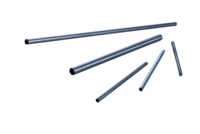
Heat pipes transfer heat from the hotspot to the cooling surface, bridging the gap between conventional air cooling and liquid cooling. Available in diameters of 4–18 mm, lengths of 50–750 mm, and in round, flat, or bent configurations.
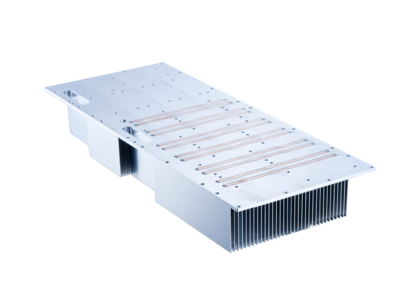
Embedded heat pipes are integrated directly into the heat sink. They absorb heat locally at the hotspot and distribute it over a larger area, thereby reducing temperature spikes and enabling more compact designs.
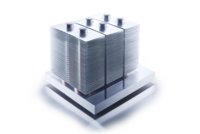
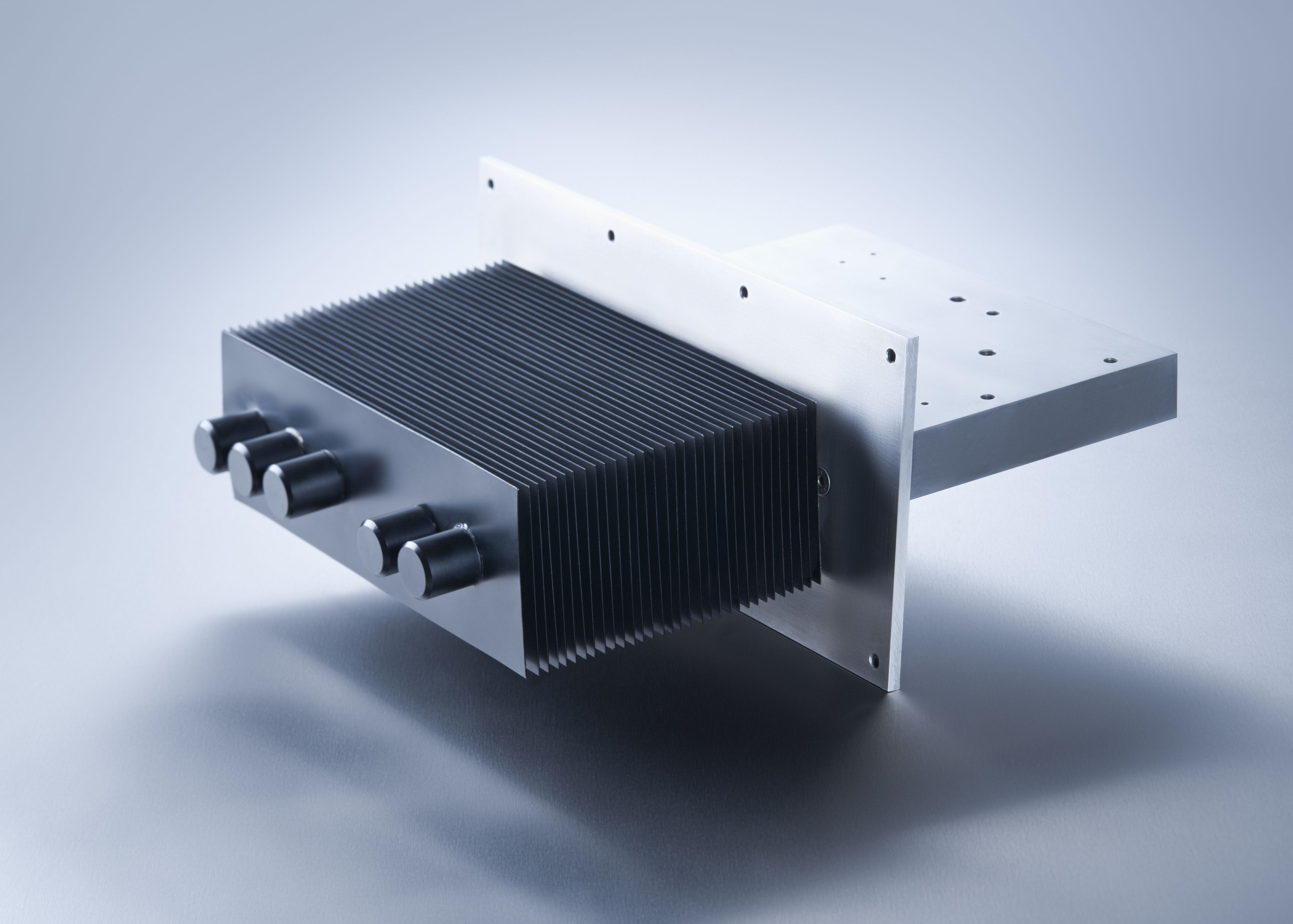
The Heat Pipe Cooling Tower is a vertically configured cooling system for SiC, GaN, and IGBT modules. Compared to conventional air cooling, it achieves up to 27% higher thermal performance.
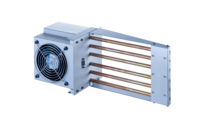
Heat pipe assemblies are pre-assembled cooling units that passively transfer heat from a hotspot to an available cooling surface. Miba not only supplies the component but also supports the entire development and industrialization process.

Miba supports you throughout the entire development process. Whether it’s build-to-print or engineering-guided, you decide where we come in.
At Miba, simulation, prototyping, validation and the transition to series production can all take place under one roof. In-house testing capabilities for thermal, mechanical, and leak tests significantly shorten iteration cycles.
Our goal: First time right - not trial and error:
A customer in the power electronics sector faced a typical challenge:
In direct comparative tests, the use of a heat pipe cooling tower resulted in up to 27% higher thermal performance compared to conventional air cooling.
Tell us about your application. We'll determine which two phase cooling solution is right for you.
Heat Pipe Cooling is relevant in any situation where high heat dissipation meets limited installation space and cooling is required:
A standard heat sink can be sufficient if the cooling surface can be positioned directly at the hotspot and the resulting heat dissipation is reliably managed.
Heat pipes are the right choice when hotspots limit performance, the cooling surface cannot be placed directly at the hotspot, or heat needs to be efficiently transported over a distance.
No. Heat pipes are two-phase systems. Heat is transferred through the evaporation and condensation of a working fluid within the heat pipe. No pumps, moving parts, or external power are required. They generally operate maintenance-free.
Heat pipes transfer heat linearly from point A to point B.
Vapor chambers distribute heat evenly across a surface.
Our Solution Team is here to help you find the perfect solution for your needs.
The Heat Pipe Cooling Tower is particularly well-suited for applications where high power dissipation must fit within a fixed installation space and liquid cooling is not an option.
The Heat Pipe Cooling Tower is specifically designed for power electronics with SiC, GaN, MOSFET, or IGBT modules.