Liquid Cold Plate from Miba

Customizable Cold Plates Based on Extruded Aluminum Profiles

Liquid Cold Plates are high-performance liquid coolers designed for the efficient heat dissipation of IGBTs, MOSFETs, and other power semiconductors. The cooling fluid is directed through the channel structure formed within the heat sink, reliably dissipating the generated heat.


Request a consultation

Florian Feiertag

Please send us your requirements regarding power dissipation, installation space, cooling medium, airflow, and pressure drop. Together, we will develop the right cooling solution for your application.

Icon cost-effective cooling
Cost-Effective manufacturing using aluminum profiles

Miba uses extruded aluminum profiles with integrated longitudinal channels. This keeps costs low and ensures that the panel is not oversized.

Icon short development time
Short development time and suitability for series production

Liquid cold plates are customized for your application through machining: length, channel layout, connections, and mounting holes. This reduces development time. Extruded profiles are generally well-suited for series production.

Icon thermische Leistung
Good thermal performance

The plate dissipates heat directly into the cooling medium. Compared to air cooling, the plate provides significantly better cooling in a smaller installation space.

Challenges in cooling power electronics

Power electronics must cope with higher power dissipation, less surface area, and less space for cooling. If air cooling or two-phase cooling is no longer sufficient, the result is reduced power output, a shorter service life, and a higher risk of failure.


When choosing Liquid Cold Plate technology, the following questions therefore arise:

  • Is the thermal performance sufficient?
  • How much is the pressure loss?
  • What type of coolant is used?
  • How close can modules be placed to the edge of the panel without leaving the cooled area?
  • How can connections, tolerances and fasteners be integrated into the existing design?


Together, we'll solve your challenges related to cooling your power electronics

Florian Feiertag

Talk to our experts about your needs.

Request a consultation now!

Advantages of Miba's liquid cold plates

Miba selects the appropriate design based on specific requirements. Options range from standard profiles to advanced custom solutions.

Advantages of Miba's liquid cold plates

Miba selects the appropriate design based on the requirements. These range from standard profiles to advanced custom solutions.


Profile adjustment using deep-hole drilling technology

If no aluminum profile fits, Miba drills deep holes directly into the panel to create the longitudinal channels. The location and number of channels are then determined by your module layout.


Heat dissipation directly beneath the modules

The channels are located where the heat is generated: The appropriate profile or custom drill holes are tailored to the module positions. This reduces thermal hotspots.


Pressure-resistant up to 200 bar

For demanding operating conditions and long service life cycles, we offer liquid cold plates with a working pressure rating of up to 200 bar.


Precise mounting surface

Depending on the design, tight tolerances and high flatness are possible. This is essential for good heat transfer from the module to the plate.

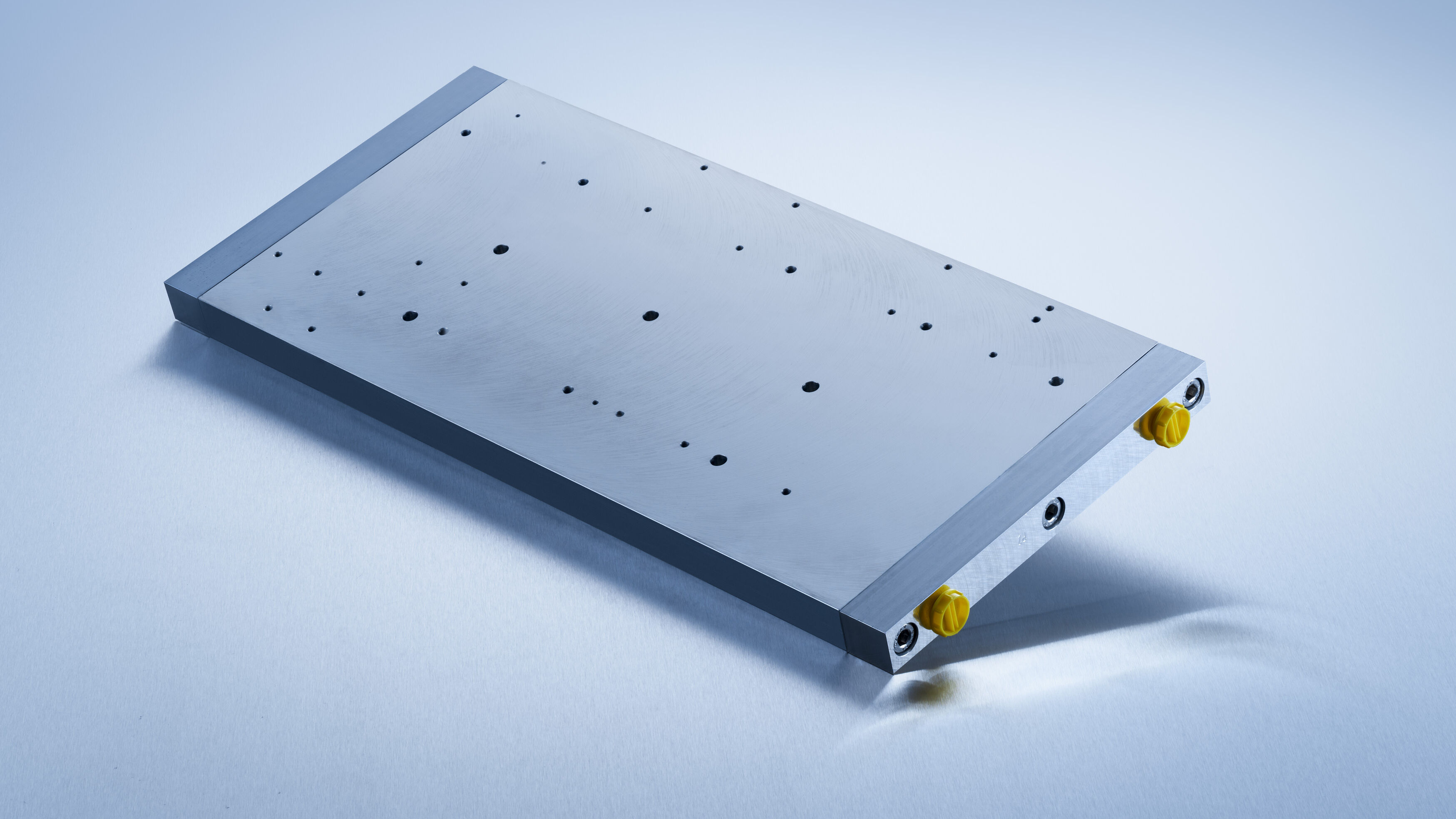
 

An overview of our Liquid cold plate series

Series KW

The KW series is a modular heat sink series designed for cost-effective, high-performance liquid cooling. It is compatible with many standardized high-performance IGBT configurations.

Download the KW datasheet


Series KS

Miba manufactures the KS series using existing standard profiles. Connectors, as well as inlets and outlets, can be customized and configured for various industries.  

Datenblatt KS herunterladen

Technical specifications of our liquid cold plates made from aluminum profiles


Dimensions

Profile widths range from approximately 100 to 430 mm, and thicknesses from approximately 20 to 32 mm. Lengths can be up to 2,000 mm.


Cooling channels

Depending on the model, 3–16 channels carry the coolant through the plate.


Connections

Inlet and outlet positions are variable. Typical sizes are 1/4“ or 3/8”; for certain larger profiles, 1/2" is also used.

Liquid cold plates made from aluminum profiles combine cost-effective construction, good thermal performance, and high design flexibility. You don't need to resort to a more complex custom solution right away.

- Thomas Pfeifer , Head of R&D -

Do you need a liquid cold plate for your power electronics?

Florian Feiertag

We'll work with you to determine the best solution for your application.

Water coolers for power electronics: product overview

In addition to liquid cold plates made from aluminum profiles, Miba manufactures three other types of liquid cooling systems for power electronics:


Product Image Stir Friction Welded Heat Sinks
Stir Friction Welded Heat Sinks

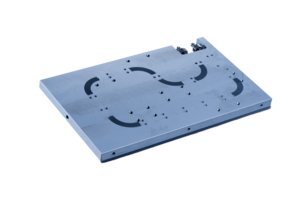
Miba seals milled channels in the aluminum base body using friction stir welding with a cover plate. The channel layout is optimized via CFD simulation to match the hotspots of IGBT, MOSFET, and SiC modules.

About friction stir-welded heat sinks


Product image vacuum-brazed cold plates
Vacuum-brazed cold plates

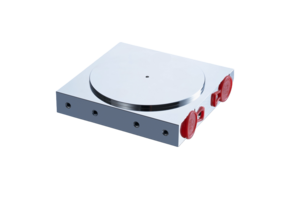
In the vacuum furnace, Miba brazes the base plate and cover plate using a flux-free process. Complex channel geometries are precisely positioned at the hotspots and can handle high power densities in IGBT, SiC, and battery applications.

About vacuum-brazed cold plates

Product image Tubed Cold Plate
Tubed Cold Plates

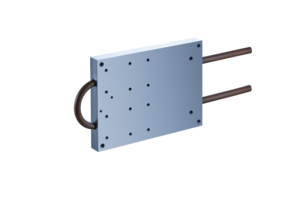
Copper or stainless steel tubes are embedded in a metal base and thermally bonded to it. The tube layout is tailored to the location of the hotspots and the available installation space.

About Tubed Cold Plates


Frequently Asked Questions about liquid cold plates made from standard profiles

If a profile’s channel configuration, dimensions, and cooling capacity match your module layout and thermal requirements. If that is not the case, Miba will be happy to assist you in selecting a suitable cooling solution.

The location of the inlet and outlet is customized to your application. Typical connection sizes are 1/4“ and 3/8”; for certain larger profiles, 1/2" is also available.

Key factors include power dissipation and the location of the modules (hotspots), the cooling medium, flow rate, supply temperature, permissible pressure drop, and available installation space. Additionally, it is important to consider whether the panel will be mounted on one side or both sides and what functions it should incorporate, such as mounting hardware or connections.

Contact us now!