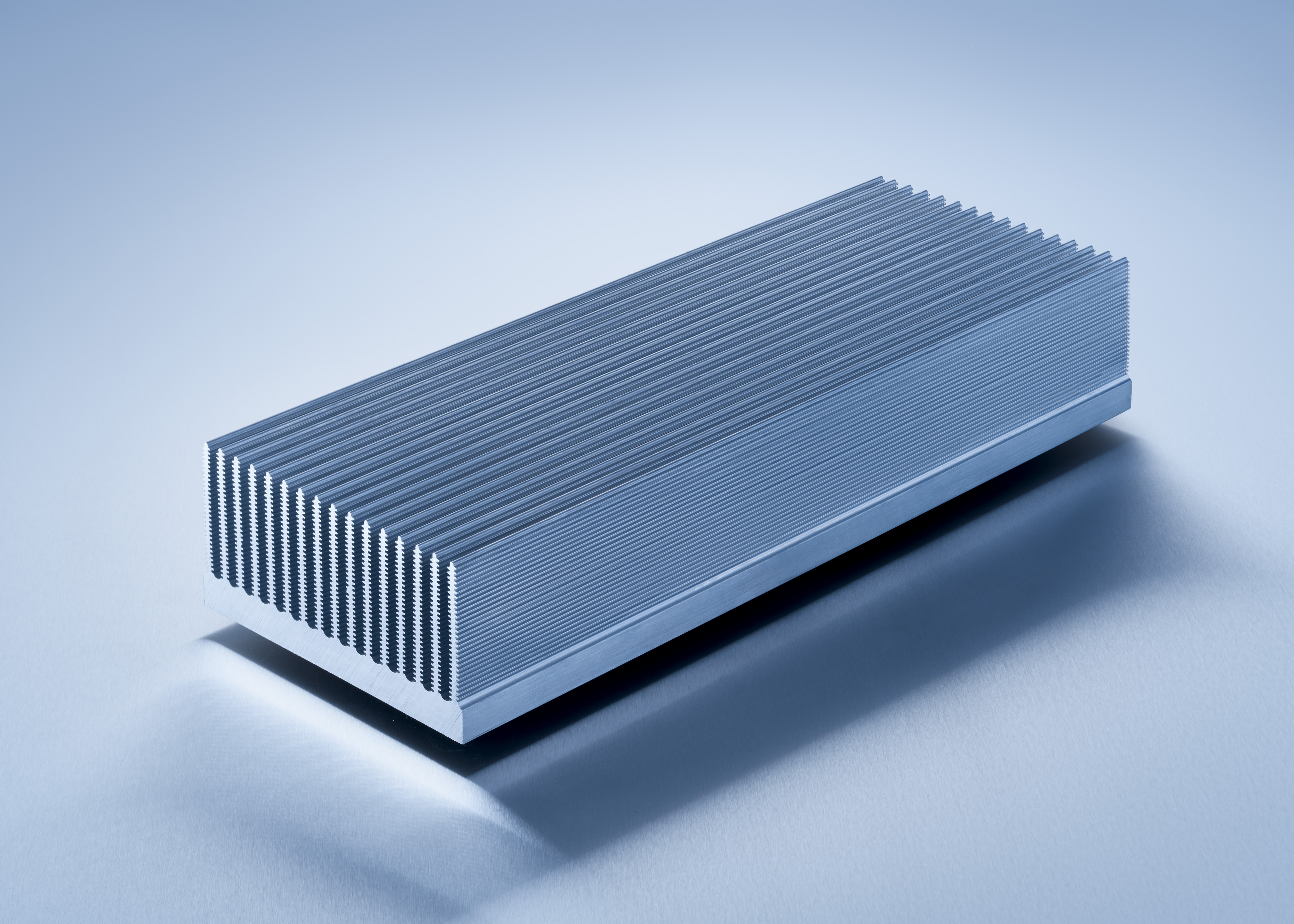
Custom Air Coolers for IGBTs, MOSFETs, and Power Modules
Miba develops and manufactures custom heat sinks for the air cooling of power electronics. We create the right cooling solution for your application, tailored to power dissipation, available installation space, airflow, and mounting conditions. From thermal design and simulation through prototyping and validation to series production, our Solution Team guides you through the entire development process.

Miba supports you every step of the way. From selecting the right heat sink technology, through simulation, design and prototyping, to thermal and mechanical validation and series production.

Dimensions, base plate, fin geometry and machining are adapted to the installation space, power dissipation, airflowHeat sinks enable reliable heat dissipation through natural or forced convection. Depending on the application, cooling can be passive or achieved using a controlled airflow generated by fans. and mounting conditions.

Heat sinks enable reliable heat dissipation through natural or forced convection. Depending on the application, cooling can be passive or achieved using a controlled airflow generated by fans.
Heat generated by IGBTs, MOSFETs and other power semiconductors must be reliably dissipated to ensure that component temperatures remain within the permissible operating range. The key factor here is not just the heat sink itself, but the interplay of power dissipation, ambient temperature, airflow, available installation space and thermal interface.
The earlier these constraints are taken into account during development, the more precisely the cooling solution can be tailored to the application. Miba supports you in defining the appropriate heat sink geometry and manufacturing technology and in thermally validating them.

Talk to our Solution Team!
Depending on thermal, mechanical and economic requirements, different heat sink technologies are used. Miba offers both build-to-print solutions based on your drawings and build-to-spec projects, in which the cooling solution is designed based on your thermal and mechanical requirements.
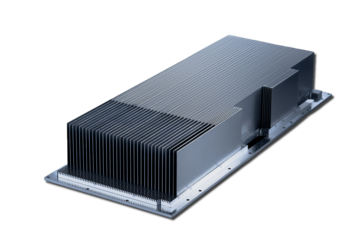
The right choice when high design flexibility and a compact footprint are required.
In bonded-fin heat sinks, individual fins are inserted into an aluminum base plate and bonded with a thermally conductive epoxy resin. This allows the fin height, fin density, and dimensions to be flexibly adapted to the thermal and geometric requirements of the application.
This technology is particularly suitable when conventional extruded profiles reach their limits in terms of geometry or cooling capacity.
Download Product Data Sheet Bonded Fin
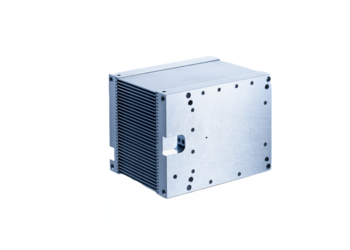
For applications requiring maximum thermal conductivity.
In soldered-fin heat sinks, the fins are soldered to the base plate. The copper construction provides high thermal conductivity and is suitable for applications with high thermal requirements.
The geometry and fin arrangement can be adapted to the application and airflow.
Download product data sheet Soldered Fin
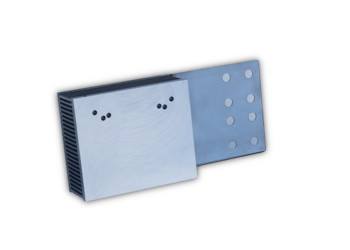
In pressed-fin heat sinks, the fins are mechanically pressed into the base plate and joined without adhesive. A high fin density and textured fin surfaces increase the effective surface area for heat transfer.
The design takes into account not only the desired thermal performance but also the resulting pressure drop and the available airflow capacity.
Download Product Data Sheet Pressed Fin (SKL)
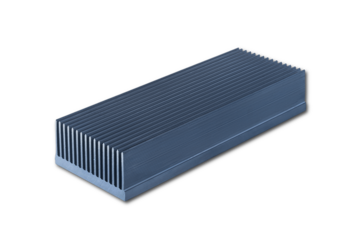
High-fin-density extrusion profiles combine a large number of fins with cost-effective manufacturing using the aluminum extrusion process. They are suitable for applications that require a large heat transfer surface area combined with a compact design.
By joining multiple profiles, even wide heat sinks can be achieved.
Download product data sheet High Fin Density Extrueded Profile
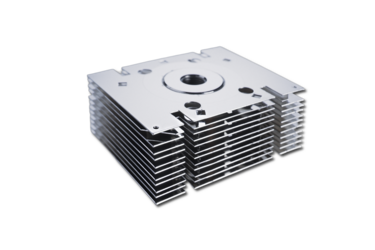
In SKL-SF heat sinks, copper fins are soldered onto a round copper core, and the assembly is then nickel-plated. This technology is specifically designed for the air cooling of hockey-puck-shaped or disc-shaped semiconductor devices and is suitable for applications with high thermal demands and mechanical stresses.
A variety of sizes allows for adaptation to the spatial and thermal requirements of the application.
Download product data sheet SKL-SF

The thermal performance of a heatsink does not depend solely on its size. Power dissipation and heat distribution, ambient temperature, airflow, pressure drop, installation space and the thermal interface between the power semiconductor and the heat sink all influence the design.
Miba takes these constraints into account as early as the concept phase. Using thermal design and simulation, the cooling solution is tailored to the specific application. Prototypes and production solutions can then be thermally and mechanically validated using the company’s own test facilities.
This allows simulation, design, manufacturing, and validation to be integrated within a seamless development process.
Talk to our Solution Team!
Air cooling is often a robust and cost-effective solution for thermal management in power electronics. However, whether it is sufficient for a given application depends, among other factors, on power dissipation, the maximum allowable component temperature, ambient temperature, available installation space, and airflow.
If the achievable thermal performance is insufficient, heat pipe or liquid cooling solutions may be suitable alternatives. Miba evaluates the thermal constraints and assists in selecting the appropriate cooling technology.
Learn more about Miba’s heat pipes
Whether air cooling is sufficient for an application depends on the interplay of power dissipation, permissible component temperature, ambient temperature, installation space, and available airflow. The higher the thermal requirements, especially when installation space or airflow is limited—the more difficult it becomes to dissipate the required heat using air alone.
If the achievable cooling capacity is insufficient, heat pipe or liquid cooling solutions may be a suitable alternative.
The following information is particularly helpful for an initial thermal design:
For build-to-print projects, an existing drawing, including tolerances and specifications, can serve as a starting point.
Material, geometry, and thermal interfaces influence the overall performance of the cooling system. Key factors include the material’s thermal conductivity, the contact area between the component and the heat sink, the surface finish and the mechanical attachment.
These factors are taken into account when designing the heat sink to meet the application’s requirements.
Yes. Miba manufactures heat sinks both according to existing customer drawings and based on customer-specific requirements. For build-to-spec projects, Miba can perform the thermal design of the cooling solution, implement it structurally, manufacture it, and validate it.
Extruded heat sinks are manufactured as aluminum profiles and provide a cost-effective solution for many air-cooling applications.
Bonded-fin heat sinks consist of a base plate with separately inserted fins that are thermally connected. This allows for taller fins and custom fin geometries.
Pressed-fin heat sinks use mechanically pressed-in fins and are particularly suitable for high air velocities as well as high thermal and mechanical requirements.
Which technology is most suitable depends on thermal performance, installation space, airflow, mechanical requirements, and economic constraints.
